Structural Auditing & Stability
A staged structural evaluation process — from visual inspection to code-based analysis — certifying the safety of existing buildings and infrastructure.
What It Does
A structured, multi-stage evaluation of existing structures, from visual inspection and non-destructive diagnostics through to detailed investigation and analytical verification. We combine field data, laboratory testing, and sound engineering judgement to certify structural soundness, map deterioration, and, where required, verify load-carrying capacity through code-based structural analysis.
Step-by-Step Methodology
Visual Inspection
On-site visual survey to identify surface distress, deflection, and early warning signs of structural degradation.
Structural Diagnostics (NDT)
Non-Destructive Testing methods applied to assess internal structural condition without damaging the element.
Engineering Judgement & Scientific Assessment
NDT findings are analyzed and interpreted through sound engineering judgement to form a scientific structural opinion.
Evaluation of In-Situ Concrete Quality
Concrete quality and strength assessed in-situ using UPV and rebound hammer — explore the methods below.
Detailed Structural Investigation
Verification through core sampling, laboratory testing, carbonation depth, chloride analysis, and petrographic analysis wherever required.
Structural Analysis (if required)
Analytical verification of load-carrying capacity, serviceability, and structural safety using engineering software and code-based assessment.
NDT Diagnostic Methods
Select any test below to explore how each diagnostic method works and what structural anomalies it identifies.
Rebound Hammer
Verifies the surface hardness of concrete elements using elastic rebound principles to estimate immediate compressive strength.
Detects low surface hardness, uniformity issues, and potential weak skin concrete zones.
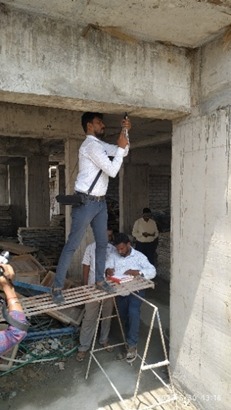
Ultrasonic Pulse Velocity (UPV)
Sends electro-acoustic transducers pulses through concrete blocks to calculate sound speed and trace concrete density.
Locates internal air voids, structural honeycombing, internal cracks, and structural discontinuity.
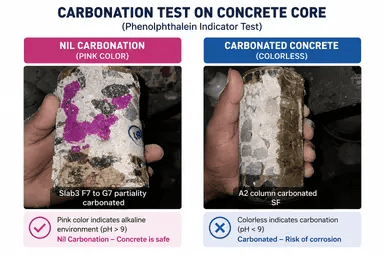
Carbonation & Chloride Tests
Applies chemical indicators (phenolphthalein) to broken cores to examine chemical depth penetration and concrete pH levels.
Identifies loss of steel rebar alkaline protection, indicating high risks of premature internal rust.
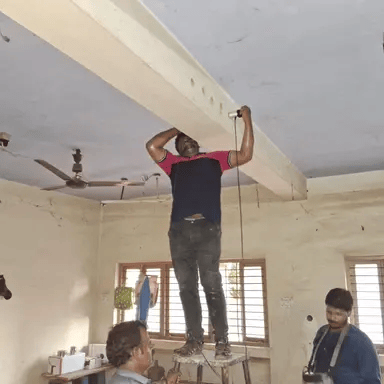
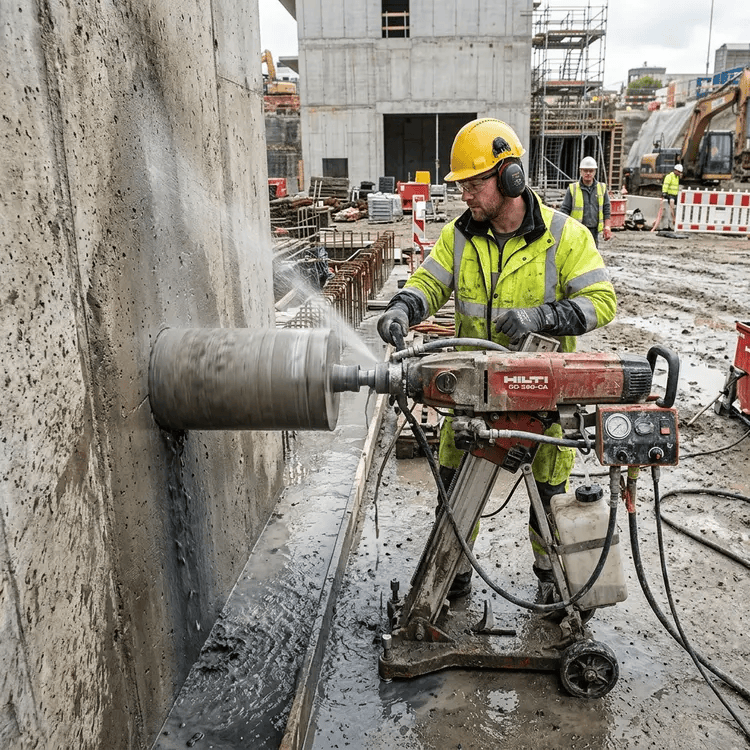
Concrete Core Drilling
Drills out physical cylindrical cores from concrete elements to perform laboratory crushing strength tests.
Verifies exact in-situ compressive strength, concrete consolidation, and aggregates layout.
Half-Cell Potential
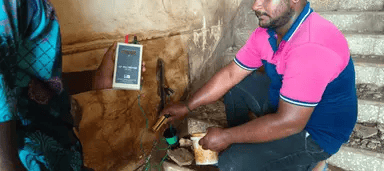
Measures electrical potential gradients across concrete reinforcements using reference electrodes to map electrical currents.
Determines the active corrosion probability of embedded steel bars before visual cracking occurs.
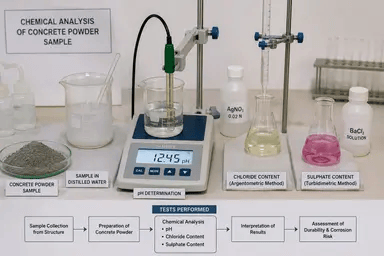
Chemical Analysis
Performs qualitative chemical extractions on mortar/concrete dust to evaluate sulfate and chloride levels.
Detects internal chemical attack hazards, aggregate reactivity issues, and soil/water salt poisoning.